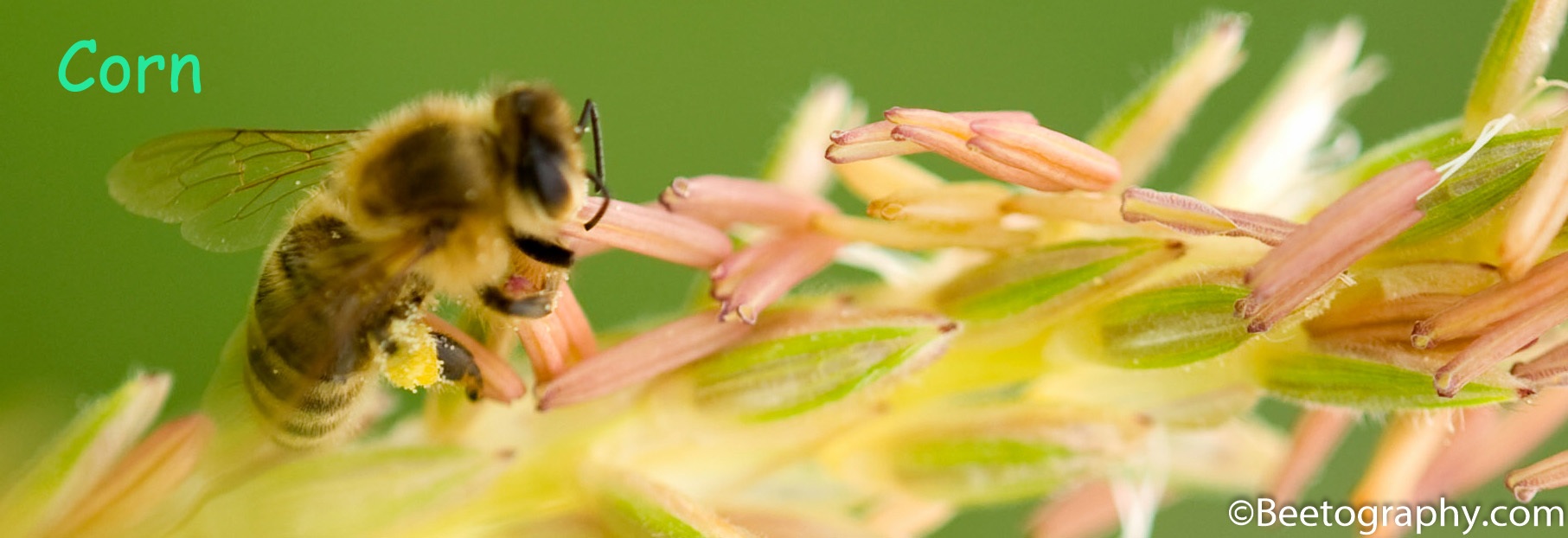
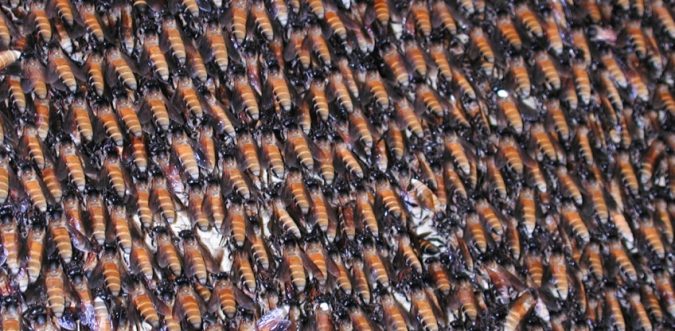
When temperatures rise, individual honey bees show a rapid stress response—but being around other bees can prevent it.
In a new study from our lab, we found that exposing bees to heat caused a sharp increase in a key stress hormone, juvenile hormone—but only when bees were isolated. Bees kept in small groups showed no such increase, suggesting that something about the social environment buffers this physiological stress.
We then asked what might be responsible for this effect. Honey bees communicate extensively using pheromones, so we tested whether a common forager-produced compound, ethyl oleate, could mimic the presence of other bees. When we applied this pheromone to isolated individuals under heat stress, it prevented the hormonal spike, effectively reproducing the protective effect of group living.
These results suggest that pheromones do more than regulate division of labor—they can directly modulate stress physiology. In other words, bees are not just socially organized; they are chemically integrated in ways that help stabilize the colony under challenging conditions.
As global temperatures continue to rise, understanding how social insects buffer environmental stress may be key to predicting and protecting pollinator health.
