
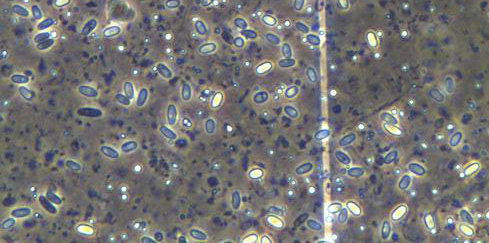
A new study from Huang lab (Michigan State University) has found that a widespread fungal parasite may be quietly undermining one of the most critical—and least visible—stages of honey bee reproduction: the mating flights of queens. Researchers report that infection with Nosema ceranae, a pathogen already known to stress honey bee colonies, significantly reduces the flight performance of both worker bees and virgin queens, raising fresh concerns about long-term colony health and resilience.
In controlled laboratory experiments, scientists infected newly emerged bees with N. ceranae and measured their flight ability using specialized flight mills. The results were striking. Infected queens experienced a 38% drop in flight duration and a 36% reduction in flight distance compared to healthy individuals. Workers showed a similar decline. These impairments extended to key performance metrics such as maximum flight distance and endurance, suggesting a broad degradation of flight capacity rather than a narrow behavioral change.
While reduced flight in worker bees could translate into less efficient foraging, the implications for queens may be even more consequential. Virgin queens rely on a limited number of mating flights early in life, during which they must travel several kilometers and mate with multiple drones to ensure genetic diversity and colony viability. A reduction in flight endurance or range could limit how far queens travel, potentially decreasing the number of drones encountered and mated with. This, in turn, may reduce sperm storage and compromise the queen’s lifetime reproductive output. In addition, if the virgin queens mate with fewer males, the genetic diversity inside a colony will be lower. There have been many studies showing higher diversity is beneficial for honey bee colonies. These benefits include better thermoregulation (more precise due to workers with different thresholds), better disease resistance (more alleles) and even better honey production (different preferences for distance or even nectar concentrations).
The study also suggests that impaired flight performance could affect mating quality, not just quantity. Queens typically fly rapidly during mating flights—possibly as a way to select only the strongest, most agile drones. If infection reduces their maximum speed or stamina, this selective pressure may weaken, potentially altering which drones succeed in mating. Over time, this could have subtle but important genetic consequences for colonies, affecting traits such as disease resistance or productivity.
Beyond reproduction, the findings point to cascading effects at the colony level. Flight is central not only to mating but also to navigation, homing, and overall colony coordination. The authors note that disruptions to these behaviors could contribute to reduced brood production and weaker colonies. Notably, the study highlights that such reproductive impacts of N. ceranae—particularly on queens—have been largely overlooked in previous research.
As honey bee populations continue to face multiple stressors, from pesticides to habitat loss, the added burden of pathogens like N. ceranae may be more complex than previously understood. By demonstrating a direct link between infection and reduced flight ability in queens, the research underscores a potential hidden pathway through which disease can impair colony success—starting at the very foundation of reproduction.
Reference:
Liu, F., Y. Zhang, Z.Y. Huang. 2026 Nosema ceranae infection reduces flight ability in queen and worker honey bees. J of Invert. Pathology.
